Tuesday, October 23, 2018

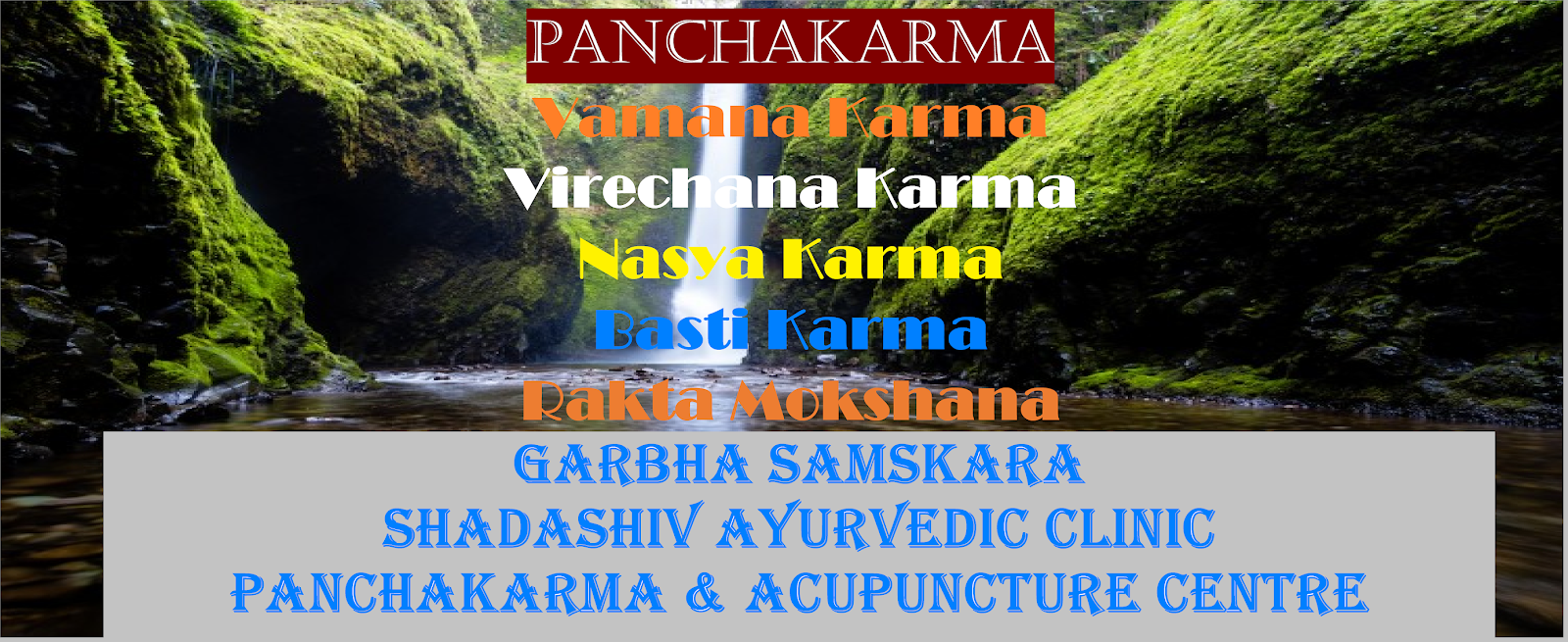
Services Available At Shadashiv Ayurvedic Clinic.


For More Details Visit Below given link for youtube video.

https://www.youtube.com/channel/UCQllaVczsP-tzdwm1gnZI5Q

Visit My website 

http://www.shadashivayurvedic.com/


FOR MORE DETAILS:

Contact:

  Vd. Nirjar T. Shukla


      Shadashiv Ayurvedic Clinic. 
      Panchakarma & Acupuncture Centre.
      Hatadiya Bazar,
      Lunawada-389230
      Mahisagar
      Gujarat
       Ph: 99799 56633
   

      Shadashiv Ayurvedic Clinic. 
      Panchakarma & Acupuncture Centre.
      5/B Srutikunj Socity,
      B/S Ilaj medical store,
      Nr. Old Maninagar Railway Crossing.
      Maninagar (E).-980008
      Ahmedabad. 
      Gujarat
       
      Ph: +919429618855, +919979956633.


Friday, September 14, 2018

PCOD (POLY CYSTIC OVARY DISORDER) / PCOS (POLY CYSTIC OVARY SYNDROME)

"This Post Is About Poly Cystic Ovarian Disorder"


In This you will come to know about PCOD/ PCOS and along with it it's Ayurvedic interpretation as well.

PCOD can be co-relate with the Artava Kshaya. This is not exact co-relation but its manifestation is similar to that of Artava Kshaya lakshanas. 

Now 1st we will discus about PCOD as per MODERN. Then after that we can see Ayurvedic Point of view.


PCOD/ PCOS

Are you experiencing problems with your periods because of hormonal imbalance? This condition, known as PCOD and PCOS, or poly cystic ovary syndrome, may make it difficult for you to get pregnant, and unwanted changes in your appearance are also indicated. In most cases, women with PCOD develop small cysts in their ovaries. These cysts may not be harmful or cancerous, but they cause hormone imbalance in your body.

Causes

The specific causes of PCOD are yet to be determined. In PCOS patients, the ovaries produce excess androgens or male sex hormones, which result in an imbalance in ovulation, acne breakout and development of excess body hair. Your body faces problems using insulin and develops insulin resistance. Genetics are considered to be a key factor that determines a woman’s chance of getting PCOD.

Symptoms

The symptoms of PCOD are mild in the beginning. The most common symptoms are as follows:

1.         Weight and difficulty in weight loss.

2.         Acne breakout.

3.        Development of excess hair on the face and body, which is not a feminine feature. Thicker and darker facial hair and unusually excessive hair on the belly, chest and back are also indicated in some women.

4.        Thinning of hair on the scalp.

 5.   Irregularity with menstrual periods. Commonly, women with PCOD experience less than 9 periods during a year. Some women may have no periods at all, while others experience heavy, abnormal bleeding.

6.         Mood swings and Depression.

7.         Hirsutism

8.         Irregular Periods.

9.         Fertility problems are likely in women with PCOD.


Treatment

The treatment of PCOD aims at relieving the symptoms and preventing long-term health problems associated with the condition. PCOD can be treated and managed by using the following measures:

1.         You should keep fit and undertake regular exercise and work out. Walking is an ideal exercise which you can opt for.

2.         You should eat heart healthy food which includes vegetables, nuts, fruits, whole grains and beans. Avoid foods which contain saturated fats and these include fried food, meat and cheese.

3.         Losing weight is beneficial for your health if you have PCOD. Losing even a small amount of weight will help in balancing your hormones and regulating your menstrual cycle.

4.         Quite Smoking as smoking increases the levels of androgen in your body.

5.  Birth Control Pills are also prescribed for reducing your symptoms, and fertility medicines are prescribed in case of infertility issues because of PCOD.


PCOD - How Ayurveda Can Help?


·         In Ayurveda, PCOD is caused due to an imbalance of any of the two doshas - Pitta (Fire) and Kapha (Water). Aggravated Pitta causes contamination of the dhatus or tissues like blood and plasma. This causes a buildup of toxins or ama in the body.
·         In PCOS patients, these toxins get accumulated in the channels of the mind, leading to an imbalance of hormones secreted by the pituitary gland. This results in an imbalance of female hormones and causes the formation of ovarian cyst which is nothing but a collection of fluids within the ovary, anovulatory periods or periods with no ovulation etc.


-Correcting hormonal imbalance
-Reducing Obesity
-Reducing high cholesterol levels
Herbs like Ashoka (saraca asoca), Dashamoola are amongst a group of herbs which are used to prepare Sukumara Kashaya like Ashwangdha, Eranda, Shatavari etc for correcting hormonal imbalance.
Other drugs for curing PCOS are-

1.Shatavari 

This helps mainly in promoting normal development of ovarian follicles. It also regulates periods and aids in revitalizing the female reproductive system. Shatavari also helps in controlling high levels of insulin due to PCOS, due to its phytoestrogen or natural plant based estrogen levels.

2.Guduchi

Guduchi is a powerful anti- inflammatory herb. We know that chronic inflammation in body tissues is the root cause for insulin imbalance and ovarian cysts in women. This herb helps in revitalizing body tissues and lowering insulin resistance.

3. Shatapushpa

Shatapushpa seeds are used as a supplement as the phytoestrogens in them bring down inflammation and control insulin resistance.

4.Triphala

Triphala is rich in Vita. C- a powerful natural antioxidant that helps in reducing inflammation by reducing free radicals. Hence this remedy is excellent for cleansing and detoxifying systems and is therefore best taken prior to taking any other Ayurvedic medicines to improve outcome.

5.Aloe Vera - Grita Kumari

Aloe Vera is yet another Ayurvedic herb that is extremely beneficial in treating PCOS as it helps in regularizing menstrual cycles and promote normal menstruation. It also normalizes hormonal imbalance. 


FOR MORE DETAILS:

Contact:

  Vd. Nirjar T. Shukla


      Shadashiv Ayurvedic Clinic. 
      Panchakarma & Acupuncture Centre.
      Hatadiya Bazar,
      Lunawada-389230
      Mahisagar
      Gujarat
       Ph: 99799 56633
   

      Shadashiv Ayurvedic Clinic. 
      Panchakarma & Acupuncture Centre.
      5/B Srutikunj Socity,
      B/S Ilaj medical store,
      Nr. Old Maninagar Railway Crossing.
      Maninagar (E).-980008
      Ahmedabad. 
      Gujarat
       
      Ph: +919429618855, +919979956633.

VISIT US
http://shadashivayurvedic.com/


Tuesday, February 13, 2018

Protect yourself in summer

Again this time some Panchakarma related information.
In Panchakarma as described in my previous post I have explained about some Panchakarma in my previous blogs, you can go through, and in this I'll explain about Rakta Mokshana Karma.

According to Charaka Acharya Panchakarma are as follows,
  1. Vamana
  2. Virechana
  3. Nasya 
  4. Anuvasana Basti
  5. Asthapana Basti
According to Sushrut Acharya Panchakarma are as follows,

  1. Vamana
  2. Virechana
  3. Nasya 
  4. Basti
  5. Rakta Mokshana
In this you have seen that Shushruthacharya has only explained about Rakta Mokshana.
Now you think why he has explained about Rakta Mokshana and Charaka Acharya omitted it, the reason behind this is very simple, Acharya Sushrutha have mentioned about Rakta as DOSHA in some places, but there are lot discussion and lot of controversies so let's not go in to that part and just simply understand that only Acharya Shushruta has 1st mentioned Rakta Mokshana.

Now what is Rakta Mokshana,
Rakta Mokshana, in simple language you can call it as blood letting therapy.

You can just think that it is very simple therapy but in practical it is very very difficult and you have to be very specific for the this. You just can not go and draw blood out. Certain measure you have to take and then only you can go for the therapy.

You have to choose all the following things wisely otherwise the whole procedure will be screwed up.
  • Appropriate Patient is the 1st and foremost requirement for the procedure. 
If you choose some very lean and thin patient, then your procedure will be proper or complication will occur.(Here if patient is lean and thin then his/her body RAKTA might be less in quantity so for that only you have to be very precise but even if patient is very lean and thin but you are sure AND YOU HAVE PROPER EXPERIENCE then you can go for the procedure no need to worry, BUT be prepare for the complication and you have to manage complication if at all occurs.)
  • Second most important thing is SELECTION OF DISEASE.


Tuesday, August 9, 2016

HOW TO PROTECT YOUR SELF IN MONSOON.

Hi Friends...

It's been long time, but since I was busy with my other stuff, I couldn't post for long time.

Now let me start with the current season. 

As its monsoon here in India. This is the time of year when people get ill too often and with all the precaution they take.

Here are some tips for you to avoid doctors heavy fees.


  1.  Avoid cold things in any form (Drinks, Food, Ice-cream, etc.)
  2. Avoid bath with cold water, at least take lukewarm water for bath. 
  3. If possible use Neem leafs. (Keep NEEM leafs in the bucket of water over night, or else you can put them in the water and make them lukewarm then use that water to take bath.) It has anti-fungal properties.
  4. If possible use lukewarm water to drink. If not all the time, at least after taking food you must take at least one and half glass of water.
  5. Use Turmeric powder in milk. One glass (200ml) in morning and one glass at night. It has anti-bacterial effect.
  6. Take minimum quantity of food during night time. So that you will not get indigestion. 
  7. If you feel body pain or feverish, then use MahaSudarshana Choorna instead of Paracetamol or any other antipyretic medicines. 
  8. Do not use the clothes which are half dry. It may cause fungal infection. 
  9. Try to getup as early as possible (5 to 6 AM / Brahma Muharta.)
  10. Sleep before 11-12 PM. 
  11. Avoid afternoon nap. 
  12. Use mask to cover nose and mouth. So that you can avoid airborne infection.
  13. Always boil water then only use it. Specially for drinking purpose. 
If you can follow above advises you can save you health.

"Stay Healthy. Stay Safe."


FOR MORE DETAILS:

Contact:

  Vd. Nirjar T. Shukla


      Shadashiv Ayurvedic Clinic. 
      Panchakarma & Acupuncture Centre.
      Hatadiya Bazar,
      Lunawada-389230
      Mahisagar
      Gujarat
       Ph: +91 2674 252479
   

      Shadashiv Ayurvedic Clinic. 
      Panchakarma & Acupuncture Centre.
      5/B Srutikunj Socity,
      B/S Ilaj medical store,
      Nr. Old Maninagar Railway Crossing.
      Maninagar (E).-980008
      Ahmedabad. 
      Gujarat
       
      Ph: +919429618855, +919979956633.

Wednesday, February 24, 2016

Arthritis / SandhiVata.

Arthritis 

Arthritis is made up of two words, Artho- Joint. and Itis- inflammation. So Arthritis means Inflammation of the Joint / Joints. There are different forms of arthritis but the most commons are, Osteoarthritis, Rheumatoid Arthritis, Psoritic Arthritis, and in certain form Gouty Arthritis.

Osteoarthritis: 

Is degenerative joint disease, it is mostly caused due to trauma / injury to the joint, infection of the joint, and / or age.

Rheumatoid Arthritis:

Rheumatoid Arthritis is a form of autoimmune disease (Means body's immune system starts to attack body tissue.), The attack is not only directed to the joints but it may also effect other parts of the body. In rheumatoid arthritis most damage occurs to the joint lining and cartilages which eventually results in the erosion of the two opposite bones.
RA often affects major joints first, Like Knee joint heap joint, elbow joint, shoulder joint, then gradually it starts affecting the other joints of the body.
If RA is diagnosed earlier then joint damage can be prevented, but if it is not diagnosed then it can lead to the joint deformities, and then after certain time, only treatment available is joint replacement, and that is not for the long time, may be 5 or 10 years or may be 15 yrs maximum. 
At present in India, for RA only symptomatic treatment is available. And as said earlier at the end joint replacement surgery is required. 

Psoriatic Arthritis:

It is also a form of autoimmune disease, and mostly seen in psoriatic condition.

Gout / Gouty Arthritis:

Gouty Arthritis is a type of arthritis, characterized by sudden attack of pain with redness, warmth, and swelling in the affected joints. It usually attacks only one joint at a time. It usually starts with the big toe (But it doesn't mean that it only starts with the big toe only it may affect any toe.), and then gradually other toes will be involved. It usually occurs in the people with rich protein diet and who doesn't do regular exercises. 
The pain and swelling in the Gout are caused due to uric acid crystals building up in the joints and leading to inflammation. The body normally forms uric acid when breaking down cells and proteins, releasing it into the bloodstream. The uric acid usually stays dissolved in the blood and ends up being flushed out by the kidneys,
if there is too much uric acid in the blood, called hyperuricemia or if the kidney can not get rid of it quickly, it may begin to form crystals that collect in the joints, even kidney skin, and other soft tissues.
Certain high protein food can make the body produce too much uric acid,triggering gout. 
Beverages such as tea, coffee, cocoa, and especially alcohol in any form lead to extra water loss from the body, can cause an attack. Certain medicine can hamper ability to clear out uric acid, such as diuretics or water pills commonly given to control high blood pressure. 
Finally sudden change in diet and weight gain or loss can also lead to gout.

Treatment:

There is no known cure for the rheumatoid or osteoarthritis. Treatment options very depending on the type of arthritis and include physical therapy, lifestyle changes which includes exercise and weight management, orthopaedic bracing and some symptomatic medicine. Joint replacement may be required in eroding form of  arthritis. 

In Following Article will write about different types of Arthritis as par AYURVEDA. And there treatment.


FOR MORE DETAILS:

Contact:

  Vd. Nirjar T. Shukla


      Shadashiv Ayurvedic Clinic. 
      Panchakarma & Acupuncture Centre.
      Hatadiya Bazar,
      Lunawada-389230
      Mahisagar
      Gujarat
       Ph: +91 2674 252479
   

      Shadashiv Ayurvedic Clinic. 
      Panchakarma & Acupuncture Centre.
      5/B Srutikunj Socity,
      B/S Ilaj medical store,
      Nr. Old Maninagar Railway Crossing.
      Maninagar (E).-980008
      Ahmedabad. 
      Gujarat
       
      Ph: +919429618855, +919979956633.